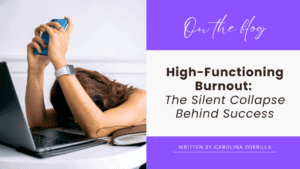
You’re smart. Successful. Respected.
So why does it feel like no one really sees you?
Feeling isolated at work isn’t just about being left out of meetings or skipped over in Slack threads. It’s about emotional loneliness. The kind that builds when you’re carrying the weight of everything, showing up strong, but feeling completely unseen.
I know this feeling intimately. There was a period when I was crushing every goal, getting recognized for my work, and being asked to take on more responsibility. From the outside, everything looked perfect. But inside? I felt like I was operating behind glass, watching everyone else connect while I performed the role of the competent, unflappable leader.
This isn’t just a “workplace issue.” It’s a deeper emotional wound that needs healing. Let’s talk about what isolation really means, how it impacts high-performing women, and how emotional healing can support your reconnection, internally and externally.
Table of Contents
The Hidden Side of Workplace Isolation
Workplace isolation is tricky because it doesn’t look like what we think loneliness should look like. You’re not sitting alone in a corner. You’re probably at the center of everything, the one people come to for answers, the reliable one, the one who has it all together.
But isolation isn’t about being alone. It’s about feeling unseen. It’s about showing up as the version of yourself that gets results while the real you stays hidden, unwitnessed, unacknowledged.

Why High-Performers Feel It Most
High-performing women are particularly vulnerable to workplace isolation because we’ve learned to lead with our competence rather than our humanity. We show up as the problem-solver, the one who doesn’t need help, the one who can handle whatever comes our way.
This creates a strange paradox. The more successful you become, the more people rely on you, but the less they see you as someone who might need support. You become the strong one, the go-to person, the one who gives but rarely receives.
I remember sitting in a leadership meeting where everyone was sharing their challenges and struggles. When it was my turn, I instinctively shifted into advice-giving mode instead of sharing my own difficulties. Later, I realized I’d been doing this for years. I’d trained people to see me as the helper, not the human.
The Weight of Being “The Reliable One”
There’s an invisible burden that comes with being the person everyone counts on. You carry not just your own responsibilities, but the emotional weight of being everyone else’s safety net. You become hypervigilant about problems, constantly scanning for what needs to be fixed or who needs to be supported.
This hyper-independence isn’t just a personality trait, it’s often a learned survival strategy. Maybe you grew up being the responsible one. Maybe you learned early that being needed meant being valued. Maybe you discovered that the best way to avoid disappointment was to never depend on anyone else.
The problem is that this strategy, while protective, also creates distance. When you’re always the one giving support, you train others not to offer it back. When you’re always the one with answers, people stop asking how you’re doing.
Signs You’re Emotionally Disconnected at Work
Workplace isolation shows up in ways that are easy to dismiss as just being busy or stressed. But if you’re honest with yourself, you might recognize some of these patterns:
You feel exhausted after interactions that used to energize you. Being around people feels draining instead of nourishing. You find yourself going through the motions of connection without actually feeling connected.

Resentment starts building, even toward people you genuinely care about. You might catch yourself thinking, “I’m always there for everyone else, but where is everyone when I need support?” This resentment feels terrible because it conflicts with your identity as someone who’s supposed to be above needing help.
You become even more self-reliant, taking on more and more because it feels easier than trying to get others to understand what you need. You stop sharing your struggles because you’ve learned that people don’t know how to respond when the strong one shows weakness.
When Success Doesn’t Equal Support
One of the cruelest aspects of workplace isolation is that it often increases with success. The higher you climb, the lonelier it gets. This isn’t just about having fewer peers at your level, it’s about the expectations that come with leadership.
The Emotional Labor of Being “Unbothered”
As a successful woman, you’re expected to be unflappable. You’re supposed to handle stress gracefully, manage conflict diplomatically, and support your team emotionally while maintaining your own composure. This emotional labor is rarely acknowledged or compensated, but it’s exhausting.
You become skilled at reading rooms, managing personalities, and smoothing over tensions. You anticipate problems before they happen and work behind the scenes to prevent conflicts. You celebrate others’ successes while downplaying your own struggles.
I worked with a client who was the youngest vice president at her company. She was incredibly talented and deserved every recognition she received. But she confided that she felt like she was performing a role rather than being herself. She was so focused on proving she belonged that she never let anyone see the moments when she felt uncertain or overwhelmed.
The Invisible Burdens Women Carry
Women in leadership positions often carry invisible burdens that their male counterparts don’t face. You might be the only woman in senior leadership, which means you’re representing all women whether you want to or not. You can’t just be good at your job, you have to be exceptional to be seen as qualified.
You might find yourself mentoring other women, serving on diversity committees, or being asked to take on additional emotional labor because you’re seen as naturally nurturing. These responsibilities are meaningful, but they add to your workload without necessarily adding to your support system.
The pressure to be perfect is intense. You know that your mistakes will be scrutinized more closely and remembered longer. You can’t afford to have bad days or show weakness because it confirms stereotypes about women’s emotional capacity for leadership.
When Being “The Go-To” Becomes Isolating
There’s a strange loneliness that comes with being indispensable. People appreciate your competence, but they don’t necessarily connect with your humanity. You become valued for what you do rather than who you are.
This creates a feedback loop. The more you prove your worth through performance, the less people think to check on your wellbeing. The more you handle everything smoothly, the less others offer help. The more you appear to have it all together, the more alone you feel when things fall apart.
Breaking this cycle requires recognizing that your worth isn’t dependent on your usefulness. You deserve support not because you’ve earned it through perfect performance, but because you’re human.

What Isolation at Work Is Actually Trying to Tell You
Workplace isolation is often a signal that something needs to shift. It’s your inner wisdom trying to get your attention, telling you that the way you’re showing up isn’t sustainable or authentic.
You May Have Outgrown Your Current Role
Sometimes isolation is a sign that you’ve evolved beyond your current environment. You might have developed new values, priorities, or ways of working that don’t align with your workplace culture. The disconnect you’re feeling might be your authentic self trying to emerge.
This doesn’t necessarily mean you need to quit your job, but it might mean you need to find new ways to express who you’re becoming. Maybe you need to seek out different projects, connect with new networks, or explore what professional success looks like in this next phase of your life.
I’ve seen many women experience workplace isolation when they’re in transition, becoming mothers, entering midlife, or simply growing into new versions of themselves. The role that once fit perfectly starts feeling constraining.
Emotional Loneliness Often Masks Self-Abandonment
Sometimes the isolation you feel from others reflects the disconnection you have from yourself. When you’re constantly performing, pleasing, and proving, you lose touch with your own needs, desires, and authentic responses.
You might find yourself automatically saying yes when you mean no, smoothing over your own discomfort to keep others comfortable, or pushing through exhaustion because you don’t want to let anyone down. This self-abandonment creates an internal loneliness that external connection can’t fix.
The path back to connection with others often starts with reconnecting to yourself. When you honor your own needs and express your authentic thoughts and feelings, you create space for others to meet you there.
Leadership Without Authenticity Feels Empty
If you’re leading from a place of performance rather than authenticity, success will always feel hollow. You might achieve every goal and receive every recognition, but if you’re not showing up as yourself, the accomplishments feel like they belong to someone else.
Authentic leadership requires vulnerability, which can feel terrifying when you’ve built your reputation on competence. But the leaders who inspire real connection and loyalty are the ones who show their humanity alongside their expertise.
This might mean sharing your struggles, admitting when you don’t know something, or asking for help when you need it. It means leading with your values rather than just your skills.
How Workplace Isolation Affects Your Mental and Emotional Health
The impact of workplace isolation goes far beyond feeling lonely at work. It affects your entire wellbeing and can create ripple effects that touch every area of your life.

The Burnout Connection
Isolation and burnout feed each other in a vicious cycle. When you feel unsupported, you’re more likely to take on too much and push yourself beyond your limits. When you’re burned out, you’re more likely to withdraw and isolate, which increases the feeling of being unsupported.
This is particularly common among high-achieving women who struggle with burnout. The pressure to maintain your image as someone who has it all together prevents you from reaching out when you need help most.
The chronic stress of isolation keeps your nervous system in a state of hypervigilance. You’re constantly scanning for threats, managing other people’s emotions, and suppressing your own needs. This takes a tremendous toll on your physical and mental health.
Impact on Relationships and Communication
Workplace isolation doesn’t stay at work. When you’re used to performing rather than connecting, it becomes your default mode in all relationships. You might find yourself struggling to be vulnerable with friends and family, or feeling like you have to earn love through usefulness.
Your communication style might become more transactional. You focus on getting things done rather than building relationships. You might lose the ability to engage in casual conversation or to share parts of yourself that aren’t directly related to productivity.
This can strain your personal relationships and make it even harder to find the connection you’re craving. The isolation becomes self-reinforcing.
The Creativity and Motivation Drain
When you feel isolated and unsupported, your creativity suffers. Innovation requires psychological safety, the feeling that you can take risks, make mistakes, and explore new ideas without judgment. Isolation erodes that safety.
You might find yourself playing it safe, sticking to proven strategies rather than pushing boundaries. Your motivation might shift from genuine excitement about possibilities to simply trying to maintain your current position.
The work that once energized you starts feeling mechanical. You go through the motions without the spark of genuine engagement. This is often when people start feeling stuck in their careers and wondering if they’ve lost their passion for what they do.
Real Healing Starts With Reconnection to Self
The journey out of workplace isolation begins with an inside job. You can’t feel genuinely supported by others if you’ve disconnected from yourself. The external relationships you crave become possible when you rebuild the internal relationship with your own needs, desires, and authentic responses.
Understanding Self-Abandonment Patterns
Most workplace isolation stems from learned patterns of self-abandonment that served you at one point but now keep you stuck. Maybe you learned to ignore your own needs to keep peace in your family. Maybe you discovered that being useful was the safest way to belong. Maybe you were taught that your worth came from how much you could handle.
These patterns feel automatic because they’re stored in your subconscious mind. You override your instincts, dismiss your needs, and push through discomfort without even realizing you’re doing it. The first step is becoming aware of these patterns so you can choose differently.
I remember the moment I realized I had been holding my breath in meetings for years. I was so focused on reading the room and managing my image that I’d forgotten to breathe naturally. That physical tension was a metaphor for how I’d been living, constantly braced for the next challenge instead of relaxed in my own presence.
Rebuilding Safety and Trust Within Yourself
Healing workplace isolation requires creating internal safety, the feeling that you can trust yourself to handle whatever comes up. When you’re constantly second-guessing your instincts or overriding your needs, you create internal chaos that makes external connection difficult.
This might mean learning to notice and honor your body’s signals about when you need rest, what environments feel supportive, or which people drain your energy. It might mean practicing saying no to requests that don’t align with your values or capacity.
Building internal trust takes time, especially if you’ve been disconnected from yourself for years. But every small act of self-honoring builds your confidence that you can navigate life from your own center rather than constantly looking outside yourself for validation.
From Isolated to Integrated: A New Way Forward
The goal isn’t to eliminate all workplace challenges or to suddenly feel perfectly connected everywhere you go. It’s to shift from isolation to integration, bringing your whole self to your work and relationships in a way that feels authentic and sustainable.
Redefining What Leadership Looks Like
Traditional leadership models often emphasize strength, decisiveness, and emotional control. But these models can create the very isolation we’re trying to heal. A new model of leadership includes vulnerability, curiosity, and emotional intelligence.
This doesn’t mean becoming weak or unprofessional. It means being strong enough to show your humanity, decisive enough to make tough choices while remaining open to feedback, and emotionally intelligent enough to connect with others while maintaining appropriate boundaries.
Leaders who operate from this integrated place often find that their teams are more engaged, innovative, and loyal. When people feel safe to be human around you, they bring their best selves to work.
Finding Your People
Sometimes healing isolation means finding new communities, mentors, or support systems that can see and appreciate all of who you are. This might involve joining professional coaching groups for women, finding a mentor who’s navigated similar challenges, or connecting with others who share your values.
The key is finding spaces where you can be both successful and human, where your competence is appreciated but your struggles are also welcomed. These relationships remind you that you don’t have to choose between being strong and being supported.
Creating these connections often requires vulnerability and initiative. You might need to reach out first, share your struggles, or ask for what you need. This can feel uncomfortable if you’re used to being the one who provides support, but it’s necessary for healing isolation.
Leading With Clarity and Boundaries
Integration also means getting clear about your values, priorities, and non-negotiables. When you know what matters most to you, it becomes easier to make decisions that align with your authentic self rather than just what’s expected of you.
This might mean saying no to opportunities that look good on paper but don’t align with your values. It might mean advocating for changes in your workplace culture or seeking out environments that better support your way of working.
Clear boundaries aren’t walls, they’re bridges that allow for authentic connection. When people know where you stand and what you need, they can meet you there. When you’re trying to be everything to everyone, genuine connection becomes impossible.
If you’re struggling with balancing career advancement with personal wellbeing, remember that this isn’t a choice you have to make. Integration means finding ways to succeed that honor all parts of who you are.
FAQs: Feeling Isolated at Work
Is workplace isolation normal for women in leadership?
Unfortunately, yes. Many women leaders experience it, especially in environments that reward performance over authenticity. The higher you climb, the fewer people there are who understand your challenges. Add to this the pressure to be perfect and the tendency to carry emotional labor for others, and isolation becomes almost inevitable. But normal doesn’t mean healthy or permanent.
What can I do today to feel less alone at work?
Start with reconnecting to yourself. Take five minutes to check in with how you’re actually feeling, not how you think you should feel. Consider journaling about what kind of support you’re craving. Reach out to one person who makes you feel seen, even if it’s not a work colleague. Sometimes the path out of isolation starts with acknowledging that you’re experiencing it.
Can workplace isolation affect my physical health?
Absolutely. Chronic loneliness and the stress of constantly performing can impact your immune system, sleep, digestive health, and overall energy levels. The nervous system doesn’t distinguish between physical and emotional threats, so ongoing isolation keeps you in a state of chronic stress that takes a toll on your body.
About Executive Coach & Author
Hola, I’m Carolina Zorilla, an Executive & Leadership Coach helping high-achievers break free from burnout and build fulfilling careers. After 12 years in corporate, I realized chasing promotions wasn’t enough. Now, I coach professionals to redefine success, set boundaries, and find balance.
That’s why I made it my mission to help high-achieving professionals break free from burnout and build careers that fuel both ambition and well-being. Through coaching, I’ve helped leaders and entrepreneurs find balance, confidence, and fulfillment—without sacrificing growth.
If you’re ready to create a career that supports your life (not the other way around), let’s talk. Book a discovery session here.

Feeling Isolated At Work Is Real, But It’s Not Permanent
With the right tools, support, and healing, you can reconnect, re-engage, and lead from a place of truth, not just function.
The path forward isn’t about becoming someone different. It’s about integrating all the parts of who you are, the competent professional and the human who needs connection, the strong leader and the person who sometimes struggles, the one who gives support and the one who deserves to receive it.
You don’t have to choose between being successful and being supported. You don’t have to sacrifice your authenticity for your achievements. There is a way to lead that honors both your ambition and your humanity.
Ready to feel seen again? Book a free clarity session to explore how emotional healing and subconscious reprogramming can help you reconnect with yourself and create the authentic connections you’re craving. You weren’t meant to carry it all alone.